Content warning: This post discusses premature birth, NICU hospitalization, and the emotional experience of early parenthood. Take breaks as you need them.
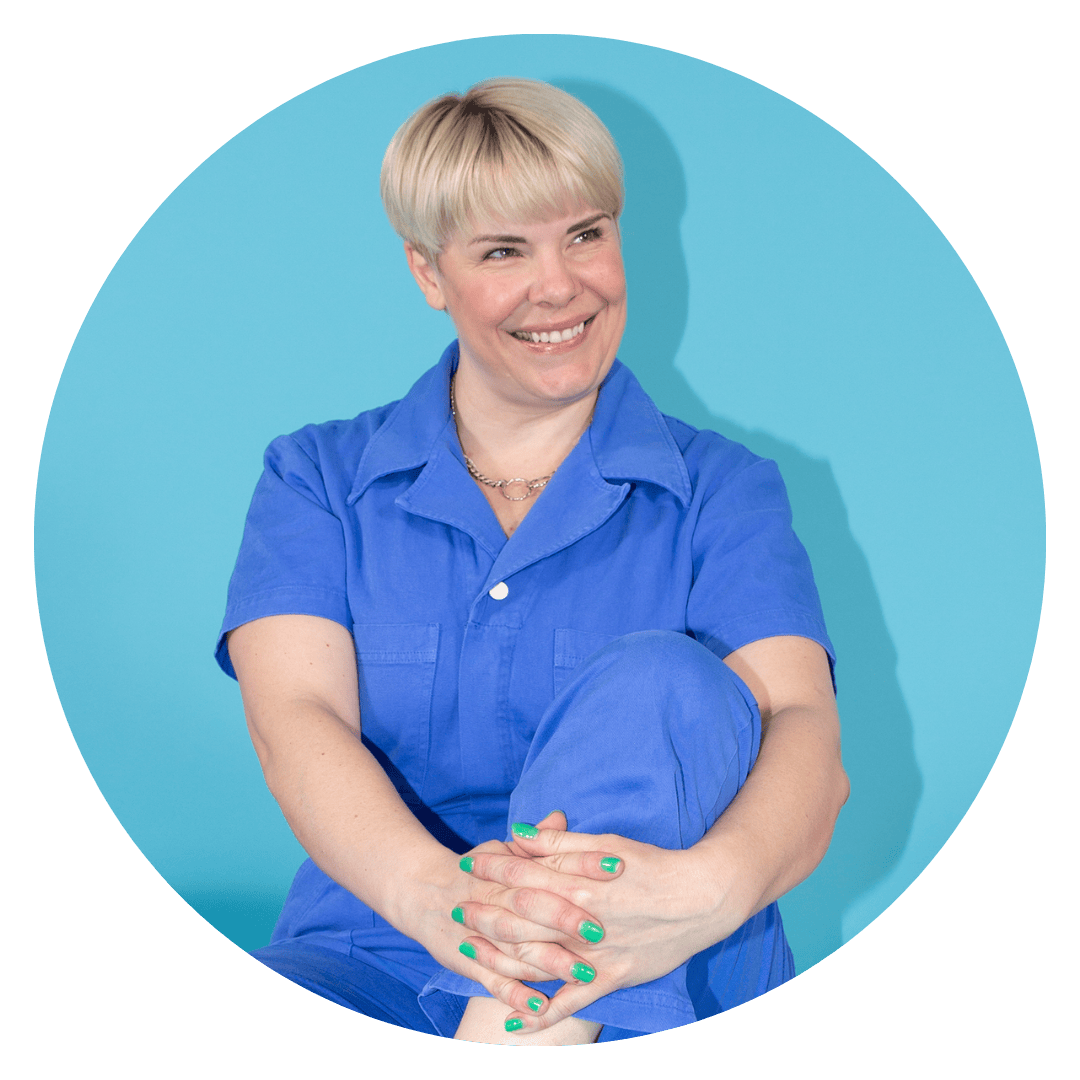
I first met Mandy Len Catron at a women’s retreat called Loaded Bow, years ago now. We’ve stayed loosely in touch the way you do with people who leave an impression, the kind of person you follow from a distance and find yourself genuinely rooting for and are so pleased when you get the chance to reconnect.
Mandy is a writer, author and faculty member at UBC in Creative Writing. Her words have stopped people mid-scroll and made them send links to everyone they love, and maybe those they WANT to love. She wrote the essay that became the viral NYT Modern Love piece about falling in love with anyone. She wrote a book. She is one of the most thoughtful voices I’ve encountered on love, relationships, and the way we tell stories about our own lives.
When I reached out to her recently, it was because I’d been thinking about a gap in what we offer at Brood. Over the years, we’ve supported many families whose babies have spent time in the NICU. And I realized we had very little content to actually support them through that experience.
Mandy had been through it. Twins, born at 32 weeks, five weeks in the NICU, during COVID, after months of being on bed rest in the hospital. I asked if she’d be willing to talk about it. She said yes, and what she shared was incredible honest and useful, and I knew we had to share it with you.
She already knew she was lucky — and it was still brutal
When I spoke with Mandy about her NICU experience, the first thing she said was:
“I will say, just to preface all this, that we were lucky, lucky.”
She had been hospitalized for six weeks before the birth. She’d had time to tour the NICU at BC Women’s. She knew her boys were going to arrive early. She had met the neonatologist in advance. By most measures, she was as prepared as anyone could be.
And it was still one of the hardest things she’s ever done.
I think about that a lot. Because the NICU is one of those experiences where even the most prepared, resourced, supported families are undone by it. Not because something went wrong. Just because of what it is.
The thing nobody said to her — that we should all be saying
Mandy had a C-section. She was wheeled to the NICU in a wheelchair, in significant pain, still very much a post-surgical patient, and the world around her had already shifted into expecting her to be a parent.
“I had gone from being a patient in the hospital and being really cared for by my nurses, to being a caretaker,” she told me. “That transition is incredibly jarring. And I think what I wish someone had said to me looking back is: you don’t need to jump into that role yet. But the system isn’t very good at acknowledging that.”
I got chills when she said it. Because she’s right. The system moves forward. The NICU has a rhythm and a purpose and a whole set of expectations, and in the middle of it, very few people pull the birthing parent aside and says: you are still a patient too. You are allowed to rest.
If you are a birthing parent reading this from a NICU waiting room or a hospital parking garage, I want to be the one who says it: you don’t have to be there every hour of every day. Your baby is in extraordinary hands. Recovering, really recovering, is not selfish. It is essential.
The pressure nobody talks about
One of the things that struck me most in our conversation was how differently Mandy and her partner Mark experienced the same NICU.
“Every time Mark would walk into the NICU, I was aware that he was happy to be there. The nurses were happy to see him. It just felt like this joyful experience all around,” she said. “But for me, I felt every day that I wasn’t there early enough, and that I wasn’t staying long enough.”
She was also pumping every three hours. Around the clock. Even though her babies weren’t home with her, she wasn’t sleeping.
“I wish I had just skipped one pump and slept six hours in a row,” she told me. “I still would have made milk. They could have supplemented a little bit, and that would have been fine. But I was so anxious. I wanted to do it right.”
There’s a whole conversation to be had about the pressure on birthing parents, and specifically on breastfeeding and chest feeding, in the NICU context. Mandy described a lactation consultant asking her, “In an ideal world, how would you like to feed your children?” And feeling like the honest answer, whatever keeps all four of us okay, wasn’t an “allowed” response.
But it should be. This is something we feel strongly about at Brood, and it’s why our post on feeding exists. All paths are valid. All paths are especially valid when you are recovering from major surgery and your babies are in intensive care.
Say yes. And be specific.
One of the most practical things Mandy shared was the story of the meal train.
A friend offered to organize one. Mandy’s first instinct was to wait until the babies came home. Then she realized: they were commuting to the hospital every day. They were arriving home at 8pm, exhausted, with nothing ready. They needed it now.
Her neighbour had a key to the house, and she coordinated the whole thing. Mandy and Mark would walk in, and food would be on the counter.
“When people offer to help,” Mandy said, “say yes.”
And her advice for the people on the other side, the friends, the family members, the colleagues who want to help but don’t know how: don’t ask what can I do? Decide, and then offer it specifically.
“Say, ‘I’m going to start a meal train for you,'” she told me. “Not ‘is there anything I can do to help?’ Decide you’re going to do a specific thing. And if that isn’t helpful to the parents, they can let you know.”
This is one of the most useful pieces of advice I’ve heard about supporting a NICU family, or really any family going through something hard or even a regular, non-eventful postpartum (do those exist?). The labor of figuring out what you need and asking for it is enormous. Taking that labor off the plate of the people who are already drowning is an act of love.
What she didn’t know — and what you might not know either
Mandy mentioned something toward the end of our conversation that I want to make sure doesn’t get buried.
She didn’t know that in Canada, you may be entitled to delay the start of your parental leave if your baby is in the NICU. She could have accessed additional leave or disability benefits, and she found out too late. If your baby is or has been in the NICU, please ask your HR department, a social worker at the hospital, or Service Canada about your options. You may have more runway than you think.
She also didn’t know that hospital transfers could happen with almost no notice. They moved from BC Women’s to St. Paul’s with just a couple of hours of warning. And she didn’t know she could have both a midwife and an OB during a complicated multiple pregnancy. She could. She did. And she credits her midwife’s presence during the birth as one of the things that made an otherwise overwhelming experience bearable.
Coming home was its own kind of undoing
The call came the morning of discharge. The hospital was ready to release the babies that day. Mandy pushed back — her mom was arriving tomorrow, could it wait? — and they said yes.
“I did not feel psychologically prepared,” she said. “And because they were in the NICU, we just weren’t set up for two babies.”
She also shared something I found quietly heartbreaking and completely understandable: she hadn’t set up the nursery. She hadn’t taken the car seats out of the box. Because after a pregnancy as complicated and uncertain as hers had been, she wasn’t ready to invest emotionally in a future that felt fragile.
“I just have so much compassion for myself now,” she said, when I asked how she feels about it looking back.
Good. She should. We all should have that kind of compassion for the decisions we make when we’re trying to protect ourselves.
And then there was a cedar tree
After everything — the complications, the surgery, the five weeks of NICU, the exhaustion, the pressure, the scramble to get the house ready — there was this.
Mandy put one of her boys in a carrier and walked to the drugstore. She took the long way. He was asleep.
“I was like, this is a cedar tree. These are blackberry bushes. This is the world. You’ve been alive, but you don’t know about the world yet. And I got to show it to him.”
That’s the other side of the NICU. The coming home. The ordinary miracle of introducing your baby to the smell of cedar and the colour of the sky.
I’m grateful Mandy was willing to share something so personal. We built this series because families going through the NICU deserve more support, during the stay and after. You can find our full NICU guide, including a free downloadable resource for families and the people supporting them, right here. And if you want to talk about what postpartum doula support could look like for your family, we’d love to hear from you.
About Mandy Len Catron: Mandy Len Catron is a Vancouver-based writer whose work has appeared in The New York Times, The Atlantic, The Washington Post, and elsewhere. She is the author of How to Fall in Love with Anyone. She is currently working on a novel. Find her at mandylencatron.com.